







A recent study conducted by the Institute of Medicine of the National Academy of Sciences estimated that as many as 98,000 patients are victims of medical errors. Though this number accounts for just one percent of surgeries a year, the statistic is still alarming—and it is the job of medical professionals to ensure that all systems run smoothly before, during, and after surgery.
This article will list common medical errors and how operating room staff can prevent them from happening.
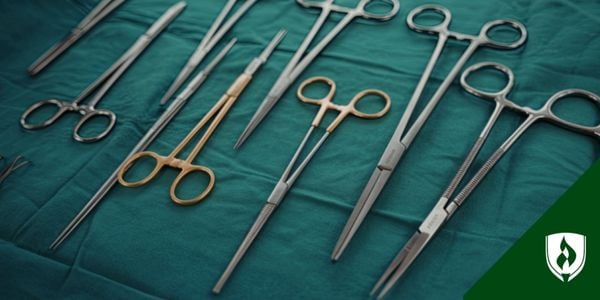
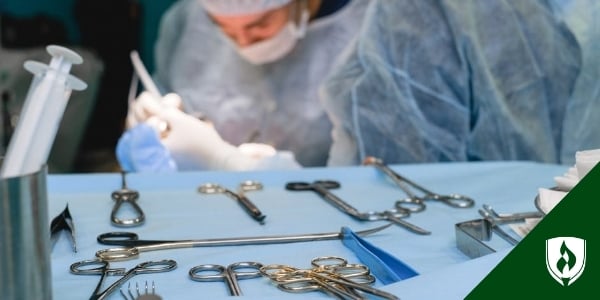
- Retained foreign objects—This includes wrong instrument and/or sponge count – During each surgical case the Surgical Technologist and circulating nurse will conduct a count. The count should include: instrumentation, sponges, needles, blades, cautery tips, hypodermic needles, and any other items the facility specifies they need to count.
Counts should be made several times during a surgery: before the procedure begins, when an organ is closed, when the peritoneum is closed, when the subcutaneous layer of the skin is closed and then post-surgery. Even though the Surgical Technologist and certified nurse are doing the counts, it is the role of all in the operating room to make sure that the counts are correct before transporting the patient to recovery. One or all of these medical professionals can be held liable for a foreign object left in the patient postoperatively.

- Patient injury resulting in falls– As soon as the patient is transported to the operating room table, a safety strap needs to be applied to the patient to prevent a fall. Patients should never be unattended. Not only could they fall, but past medical malpractice errors have shown that patients have been abandoned.
- Positioning errors—When positioning a patient for surgery, medical personnel involved in a surgery need to make sure that the patient’s pressure points are properly padded. Improper positing can lead to nerve and joint injuries. Anesthetized patients can’t communicate pain, therefore it is up to the surgical team to make sure the patient is comfortable and positioned correctly to avoid unnecessary injuries.
- Break in Sterile Technique – Medical professionals, especially in the Surgical Technology field, need to live and breathe sterile technique in order to avoid surgical mishaps. Improper practice of sterile technique could very well lead to a post-operative infection. An infection could be caused by unsterile instrumentation—like hastily sterilized surgical equipment including ratcheted clamps or certain instrumentation was still assembled when autoclaved. This inhibits the instrument to be sterile.
The Surgical Technologist not only needs to practice good sterile technique, but they also need a strong application of surgical conscience.
- Improper identification, mishandling or loss of Specimens—Any way you look at it, it is not good if medical negligence has occurred. Surgical personnel, especially Surgical Technologists need to handle ALL patient specimens with care. They need to think of specimens in the terms that they are a part of someone who would hope that you respect their body and understand what they are experiencing. For most people, the operating room is the last place most people want to be. The loss of specimen would prevent a diagnosis which means there may need to be another unnecessary surgery.
- Medical professionals must also make sure that they are labeling the specimen correctly. Failure to do so may lead to a misdiagnosis. An example would be as follows: The surgeon removes tissue from the left breast but it is handed to the nurse as tissue right breast. The diagnosis is not going to be what may be expected. Double and triple checking with the lead doctor is imperative….
Allied Health and Nursing professionals need to put the patient and their safety first and follow the necessary steps to make sure these medical errors don’t happen.
Supplemental Reading:
(http://www.medicalmalpractice.com/National-Medical-Malpractice-Facts.cfm)
About the Author: Nadine Bengs, CST is Departmental Chair of Surgical Technology at Rasmussen College's Brooklyn Park location. She has worked in the medical field for more than 12 years at Methodist Hospital, St. Cloud Hospital and at an outpatient surgery center in Edina, Minn. Nadine received her AAS degree from St. Cloud Technical College. She currently teaches the core surgical technology classes and Microbiology at Rasmussen College.
Comments (7)
Subject - plastic surgery los angeles
more useful site. Useful to common peoples.i get more information from this.
We really need to reduce these medical errors - Mark Zimmerman
Medical errors like these are really unacceptable. But how can we reduce them without jumping up costs? Lot's of potential, but lots of questions still need to be answered.
-Mark
medical malpractice - medical malpractice
I agree with Mark these kind of errors are really unacceptable, and also very painful for the patients who have been injured through no fault of their own . They can take a stand with the authorised medical malpractice.
Medical malpractice - Medical malpractice
I really like you to write this article, I feel great write, I support you. Also hope you have the time and participate in discussions with Medical malpractice Law more
Subject - Name
I can't believe the number of medical errors such as these are so high. I had no idea.
Are there any stats on how many people die as a result of medical errors?
Kristelle Cambell
Medical errors - Kristelle
I can't believe the number of medical errors such as these are so high. I had no idea.
Are there any stats on how many people die as a result of medical errors?
Kristelle Cambell
Doctors' records - Dr. Jeffrey Donaldson, Columbus, Ohio, plastic surgeon
Patients should always be encouraged to check their doctor's records before submitting to surgery, elective or otherwise. One of the best ways to do this is to check with the county clerk's office or the doctor's medical board. There are even certain websites out there that will let you know if the doctor has been previously involved with patient lawsuits.