-
Self-Directed Assessments & Empowered Learning®
The Certificate, Diploma, Associate's and Bachelor's degrees are available with $149 self-directed assessments, which allow you to show that you already have the skills in a particular course and don’t need to take it. Save time and money with self-directed assessments and other Knowledge Credit® options.
The Bachelor’s degree is also available with Empowered Learning®, which means you can:
- Access courses anytime, from almost anywhere
- Go faster when you can, and slower when you need to
- Create real-world projects that prove your new knowledge
- Stay connected with faculty and peers in live sessions
For additional information, visit our Empowered Learning® page.
-
Institutional Accreditation & Industry Credentials
Rasmussen University is accredited by the Higher Learning Commission (hlcommission.org ), an institutional accreditation agency recognized by the U.S. Department of Education.
Our curriculum includes a focus on preparing students to apply for their Child Development Associate (CDA)® 4 Credential from the Council for Professional Recognition. Rasmussen University is proud to be an official partner of the Council for Professional Recognition.
-
Carry Your Credits Forward
Our Early Childhood Education programs make it easy to apply your current credits toward a degree. In fact, our ECE Bachelor’s degree students transfer in an average of 93 credits—which is equal to $29,946 transfer credits—helping you save time and money on your way to furthering your impact on children’s lives.5
-
Online Courses & Transferable Skills
With flexible online courses and the opportunity for real-world assessments, you’ll learn practical tips about this field and develop employer-valued transferable skills: critical thinking, digital fluency, information literacy, communication and ethics and professional responsibility.

Early Childhood Education (ECE) Degree
Bachelor’s Degree, Associate’s Degree, Diploma, Certificate
As an early childhood educator, you have the opportunity to make a positive difference in the lives of young children. Earning a non-licensure Early Childhood Educator degree online from Rasmussen University can help prepare you to pursue your passion in education. 1 Learn how to foster social, emotional and intellectual development in children from an institution that has offered non-licensure ECE programs since 1992.
You can earn your ECE Associate’s degree for an estimated $20,445, 2 plus you have the opportunity to save almost $5,750 more through self-directed assessments.3 You can also choose from affordable Early Childhood Education degree online options at the Diploma and Certificate level to put your goals within reach.2
Our ECE degrees do not prepare students for licensed teaching positions in any public school setting, but students will have the opportunity to help shape the futures of young children from birth to age six in a childcare or non-public school setting or leadership role.
Early Childhood Education Credentials Offered
Early Childhood Education (ECE)
Bachelor's Degree
Finish in as few as
18 months6
Learning includes
- Online
- Campus Support and Resources
- Empowered Learning®
Intended for
Students looking for transferrable skills to be a lead early childhood educator, run their own early childhood education program or pursue advanced training working with children and families. Students who want a program with fast time to completion, flexible learning options and affordability. Students who desire to work with children from birth to age eight in a childcare and non-public school setting and are driven by a passion for the development of healthy, happy children. Students can choose between the traditional degree in Early Childhood Education ECE Leadership track or specialize in Child Development.
Prepares you for
Roles including center director, preschool owner, business owner-family childcare, preschool director, childcare administrator, assistant director, lead teacher, program administrator head start teacher or program manager. Please inquire with your particular state childcare/early childhood educator qualifications for opportunities in your state.
While the ECE degree does not lead to public school licensure or certification in any state, it does prepare you to be an early childhood expert.
Early Childhood Education (ECE)
Associate's Degree
Finish in as few as
18 months6
Learning includes
- Online
- Campus Support and Resources
Intended for
Students looking for career-focused skills, affordability and, upon graduation, may be interested in laddering their credentials towards a Bachelor’s degree. Students who desire to work with children from birth to age eight in a childcare and non-public school setting and are driven by a passion for the development of healthy, happy children. Students specialize their degree in either Special Needs or Child Development.
Prepares you for
Roles including early childhood educator, educator's assistant, early childhood special education assistant, private preschool educator, childcare assistant, center director or assistant director. Please inquire with your particular state childcare/early childhood educator qualifications for opportunities in your state.
While the ECE degree online does not lead to public school licensure or certification in any state, it does prepare you to have well-rounded knowledge and skills about early childhood education
Early Childhood Education (ECE)
Diploma
Finish in as few as
15 months6
Learning includes
- Online
- Campus Support and Resources
Intended for
Students looking to enhance their skills or take an initial step into early childhood education and may be interested in obtaining other credentials in the future. Students who may desire to work with children from birth to age eight in a childcare and non-public school setting and have a passion for the development of healthy, happy children. Students specialize their ECE degree in either Special Needs or Child Development.
Prepares you for
Roles including early childhood teacher, teacher’s assistant, early childhood special education assistant, preschool teacher. Please inquire with your particular state childcare/early childhood educator qualifications for opportunities in your state.
While the ECE degree does not lead to public school licensure or certification in any state, it does prepare you to be an early childhood expert.
Early Childhood Education (ECE)
Certificate
Finish in as few as
9–12 months6
Learning includes
- Online
- Campus Support and Resources
Intended for
Students looking to take an initial step into early childhood education and may be interested in obtaining other credentials in the future. Students who may desire to work with children from birth to age eight in a childcare and non-public school setting and have a passion for the development of healthy, happy children.
Prepares you for
Roles including early childhood teacher’s aide. Please inquire with your particular state childcare/early childhood educator qualifications for opportunities in your state.
While the ECE degree online does not lead to public school licensure or certification in any state, it does prepare you to be an early childhood expert.
Not Sure This Degree Is Right for You?
Take the Next Step—Talk to Us!
Early Childhood Development Milestones: What You Should Know
If you’ve ever spent time with young children, you already know they are amazing learners. We compiled this resource to help you understand all of the important child development stages little ones go through and what milestones to look for along the way.
Read more
Experienced and Dedicated Faculty
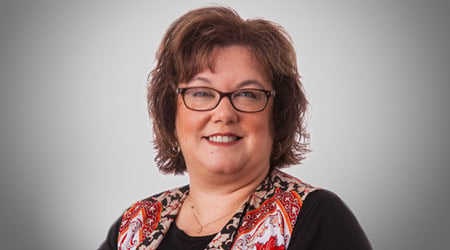
Mary Muhs is Academic Program Director - Education at Rasmussen University. With over 30 years of experience and many recognitions in the field, she has worked in preschools, in leadership and administration, and in mentoring and coaching. Dr. Muhs earned her EdD in Early Childhood Education from Walden University and Mary earned a Master’s degree in Early Childhood Education Administration from National Louis University, and is also the published author of Family Engagement in Early Childhood Programs (Redleaf Press).
Turn Your Online ECE Education into a Career
As a Rasmussen University ECE student, you can choose from different specializations related to a degree in early childhood education to enhance your skills in a particular area of interest. At the Diploma and Associate’s degree levels, you can choose between Special Needs and Child Development. In the Bachelor’s degree program, you can choose between Leadership and Administration and Child Development.
With your degree in Education from Rasmussen University, you can pursue a variety of common careers depending on your earned credential. For example, with your ECE Bachelor's or Associate's degree, you could pursue a career as an early childhood teacher (in private childcare settings), teacher's assistant, early childhood special education assistant or head start teacher.
"The fully online courses allowed me the flexibility to continue to work while still attending school."
Ny'nisha
Graduate, School of Education