-
Institutional and Programmatic Accreditation
Rasmussen University is accredited by the Higher Learning Commission (hlcommission.org), an institutional accreditation agency recognized by the U.S. Department of Education. The Surgical Technologist program is accredited by the Commission on Accreditation of Allied Health Education Programs (CAAHEP). Learn more about programmatic accreditation and the Commission on Accreditation of Allied Health Education Programs (CAAHEP).
-
Surgical Tech Programs in Illinois, Minnesota and Florida
The blended on-campus and online surgical technician program provides a solid understanding of the healthcare industry. The Surgical Tech program is offered at the following local campuses near you:
- Central Pasco Campus – Odessa, Florida
- Rockford Campus – Rockford, Illinois
- Romeoville/Joliet Campus – Romeoville, Illinois
- Hennepin/Anoka Campus – Brooklyn Park, Minnesota
-
Surgical Tech Certification Exam Prep
Upon graduation, students are prepared to take a national surgical tech certification exam to add to your professional credentials at no additional cost.2
-
Self-Directed Assessments
Save time and money on your Associate's degree with self-directed assessments. These $149 online, interactive assessments allow you to show that you already achieved the skills and knowledge for a particular course and don't need to take it. We'll provide prep materials and you can work with a peer tutor to prepare at no additional cost. Learn more about self-directed assessments and other Knowledge Credit® options.
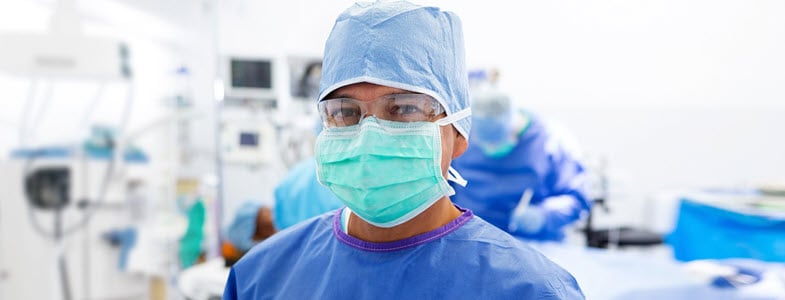
Surgical Technologist Program
Associate's Degree
In this CAAHEP-accredited Surgical Tech program, you will learn to professionally carry out common operating room procedures and handle high-pressure situations as a valuable member of a surgical team. You’ll be trained in four focused skills areas of surgical technology: preparing operating rooms, assisting surgeons during surgery, sterilization techniques and compassionate patient care. In as few as 21 months, you can earn a Surgical Technologist Associate’s degree, which provides hands-on training in surgical suite labs to help prepare you for a fulfilling career.1
Surgical Technologist Credentials Offered
Surgical Technologist
Associate's Degree
Finish in as few as
21 months1
Learning includes
- On-Campus and Online Classes
- Field Experience
Intended for
For those with an interest in helping patients by working in a laboratory or operating room. Students looking for a successful career in surgical technology and advancement with well-rounded knowledge about the field.
Prepares you for
Surgical technologist
Not Sure If the Surgical Tech Associate’s Degree Is Right for You?
Take the Next Step—Talk to Us!
6 Reasons Why Becoming a Surgical Tech Is Worth it
You’re ready for something better; something to launch your career and allow you to make a difference. Keep reading to learn some facts that may help you decide if a Surgical Tech program is perfect for you.
Read more
Turn Your Surgical Technologist Education Into a Career
With our surgical tech school online and on campus, we’ve made advancing your surgical technologist career even easier by offering classes and credentials that fit into a busy working schedule. Once you earn your Associate’s degree, you can also choose to continue your education by transferring your credits into our Health and Wellness Bachelor’s degree program. From your first day in your Surgical Tech classes, we're preparing you to successfully sit for exam certification. As a Surgical Tech program online and on-campus student, you prepare to take the NBSTSA CST National Certification exam to add to your professional credentials at no additional cost.2
Here is an overview of your potential career field with a Surgical Technologist degree.
Surgical Technologists
-
BLS Projected Growth 2020–2030: 3
9%
-
BLS Typical Entry-Level Education:
- Postsecondary Non-Degree Award
Accreditation
Commission on Accreditation of Allied Health Education Programs (CAAHEP)
The Surgical Technologist AAS Program at the Hennepin/Anoka, Minnesota, campus, the Central Pasco, Florida, campus, and the Rockford and Romeoville/Joliet, Illinois, campuses is accredited by the Commission on Accreditation of Allied Health Education Programs (CAAHEP.org) on the recommendation of the Accreditation Review Council on Education in Surgical Technology and Surgical Assisting (ARC/STSA).
Commission on Accreditation of Allied Health Education Programs
9355 113th Street N, Suite 7709
Seminole, FL 33775
727-210-2350
www.caahep.org
Surgical Technologist Program Outcomes
Rasmussen University has Rasmussen University and National NBSTSA Certified Surgical Technologist (CST) exam pass rates available to view.