


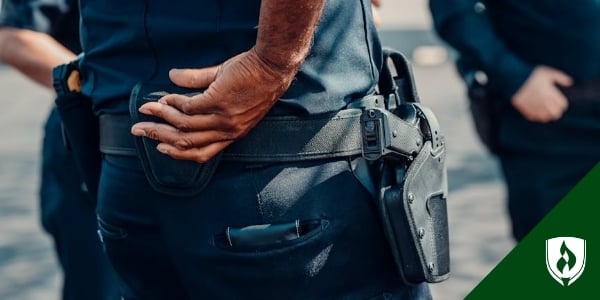






Picture this: a police officer walks into a store and grabs a coffee, goes to pay for it and the owner tells him that it’s on the house (free). The officer’s department policy dictates that there is to be no acceptance of any gratuities, regardless of scale or cost. However, the department’s policy also notes that beverages are an acceptable gratuity so as long as they are also provided to the general public. In the situation, if the officer does not accept the offer of a free beverage, he may possibly upset or embarrass the owner. What does the officer do?

Individuals in criminal justice are faced with ethical decisions every day. Police officers on the street may be offered favors for increased services or protections. Correction officers are asked daily for favors by inmates, ones not part of typical protocol or procedure. Ethics is the foundation of the criminal justice field, and the personal determination of right and wrong is a crucial part of officer code.
The ethical background of the officer— whether religious, natural, or cultural—influences all or decisions. However, issues of ethics are not ever as simple as right and wrong: they are often much more complex. The American Psychological Association includes six principles within its guidelines for the ethical decision-making process competence; integrity; professional and scientific responsibility; respect for people’s rights and dignity; concern for others’ welfare; and social responsibility.
The officer code of ethics in criminal justice has many variations. The International Association of Chiefs of Police’s (IACP) ethical oath is as follows: “On my honor, I will never betray my badge, my integrity, my character, or the public trust. I will always have the courage to hold myself and others accountable for our actions. I will uphold the constitution of my community and the agency I serve.”
As you can see, there are similar properties to both the IACP and the APA code of ethics, including: integrity, responsibility, and social welfare.
Now, go back to our beginning situation. The police officer could accept the beverage, but in order to keep to code, beverages would also have to be offered to the general public. The officer finds out that the owner is only offering the coffee to him for free—not to others. The officer now has to make a decision whether to take the coffee or not. The officer is faced with an ethical issue, a moral dilemma. All in all, there is no correct answer. If you were the officer, would you take the beverage?
About the Author: Peter Greenberg is a Criminal Justice Instructor for Rasmussen College Online. In his position, he teaches students seeking Bachelor’s and Associate’s Criminal Justice degrees online.
Comments (3)
Coffee and Law Enforcement - Keurig
I was in law enforcement for many years and had free coffee, lunches and other things offered to me. Because of the upbringing in my family, I turned them all down but watched my partner accept them.
I never saw any preferential treatment being given by my partner to one of these owners, but then again none of them ever had need of our services either.
In the end I have decided, as a personal choice, to just drink coffee I make at home on my tassimo coffee makerand fill my thermos from.
coffee and law inforcement - Stephanie
I would say thank you but I'll pay for mine while wearing a smile.
Ethics and the badge - Mark DeRosia
I am not certain why this issue of a cup of coffee is such a big deal. The Code of Ethics is very clear and each officer who is sworn to uphold the law, swears to uphold the Code of Ethics. Yes, it may only be a cup of coffee. But the truth is, I have been a police officer (with at least 10 years in upper management), and I have never seen a business owner give a citizen a free cup of coffee or meal for that matter. The answer is clear, do not order anything that you do not have the money to pay for it. This is the easiest way not to be faced with that problem in the future. Leaving a tip that covers the cost of the item is not the appropriate way to handle this situation. It is easier to be honest and just say it is a violation of our policy to accept discounts or anything for free. While the business owner may be upset, I think it helps re-enforce the trust the community has in their officers.