Police Oral Board Interview Questions: How to Prepare And What to Expect
By Karl Hyppolite on 10/13/2026
A police oral board interview is more than a standard job interview. It is your chance to show who you are, why you want to become a police officer and how you may fit into a law enforcement career.
“The oral police interview is the police applicant’s chance to shine,” says Eileen Carlin, Professor of Criminal Justice at Rasmussen University.
That does not mean you need to sound perfect or memorize every answer. Interviewers want to see your personality, goals, confidence and sincerity. They are also watching how you communicate and carry yourself.
If you can make a good impression in the oral board interview, you can help show that you have the interpersonal skills needed for public service. That includes staying calm, speaking clearly and putting others at ease in difficult situations.
How do police oral board interviews work?
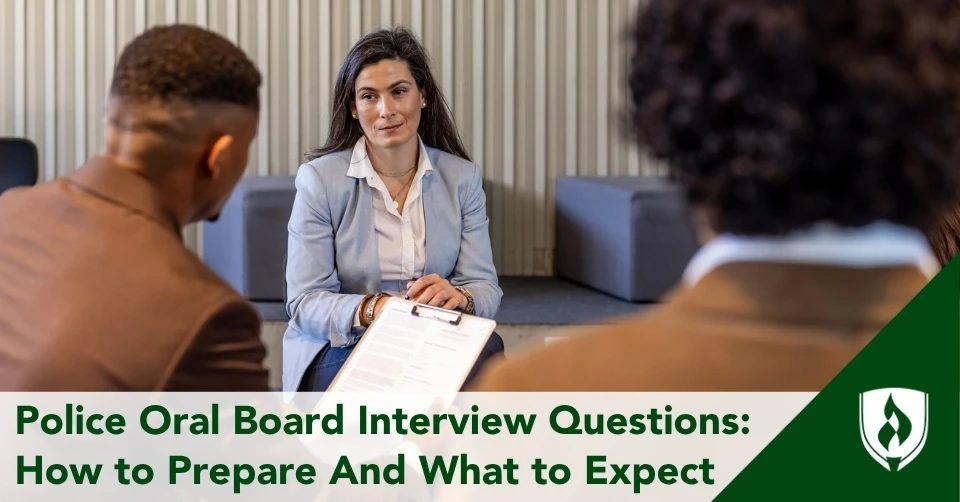
A police oral board interview is a panel interview used by many police agencies during the hiring process. The board may include a police chief, lieutenant, sergeant, human resources representative or someone from the community.
During the interview, each interviewer may ask direct questions. These questions can focus on your background, goals, interest in the department and reasons for becoming a police officer.
You may also be asked how you would handle specific situations on the job. These questions help the board learn how you think, communicate and respond under pressure.
What are police agencies looking for?
Police agencies want to know whether candidates can communicate clearly, think through problems and act with maturity. The board is not only listening to your answers. They are also watching how you present yourself.
Carlin says the oral board is a chance to show that you can handle different situations “professionally, firmly and fairly.” Those traits matter in law enforcement because police officers often need to manage conflict, explain decisions and serve people during stressful moments.
The best candidate is not always the person with the most polished answer. A strong candidate is honest, prepared and able to articulate why they want to serve the community. Showing confidence, respect and a real interest in the department can help you make a good impression.
Common police oral board interview questions
Police oral board interview questions can vary by agency, city and position. Carlin notes that each city may have different concerns, so the questions often reflect the community the department serves.
Some questions may focus on your goals. Others may ask about your background, your knowledge of the department or how you would respond in a difficult scene. Here are a few common types of questions to prepare for.
Scenario-based questions
Many oral board questions ask how you would respond to a job-related situation. Examples may include:
- How would you handle an alcohol-impaired driver who refuses to get out of the car?
- How would you respond to a citizen who is angry about reckless drivers in their neighborhood?
- What would you do if a superior ordered you to do something against regulations?
- How would you respond if your partner was injured and the assailant left the scene?
These questions test judgment, communication and safety awareness. They also show whether you can stay calm, follow the law and explain your actions under pressure. The board is not just looking for what you would do. They want to hear how you think through conflict, duty and public safety.
Questions about your motivation
The board may ask questions such as:
- Why do you want to become a police officer?
- What is your biggest source of motivation?
- What are your five-year career goals?
These questions help the board understand your interest in public service and your long-term fit for a law enforcement career. Strong answers should feel honest, specific and connected to the community you hope to serve.
Questions about your background and character
You may also hear questions such as:
- How would your friends describe you?
- What are your strengths and weaknesses?
- Give us three reasons why we should hire you.
These questions are meant to show your self-awareness and honesty. They also give you a chance to make a good impression without sounding rehearsed. Try to describe yourself clearly and give an example when it helps explain your answer.
Questions about department knowledge
Some questions test whether you have researched the agency. For example, the board may ask:
- Tell us what you know about this department.
- What other departments have you applied to?
These questions help the board determine whether your interest feels real. Before the interview, research the department, the community, local concerns and the type of work officers may handle there.
How to answer police oral board interview questions
Strong answers do not have to sound perfect. They should show that you listened, understood the question and can explain your response clearly.
Start by answering the question directly. Then explain your reasoning. If you have a brief example from school, work, your personal life or past service, use it to support your answer. This can help the board see how you think and how you have handled real situations before.
It also helps to practice, but do not memorize every word. If your answers sound too rehearsed, they may not show who you are as a person. Focus on being calm, honest and professional.
Carlin’s own interview showed how personality can matter. She brought a plaque from a previous department to show the interviewers but accidentally held it upside down.
When she noticed, she laughed and the interviewers laughed too. She got the job.
The lesson is that confidence can include being able to recover from a small mistake. A strong police officer candidate should be able to stay composed, communicate clearly and keep going.
How to prepare for the oral board interview
The best way to prepare for an oral board interview is to start before the week of the interview. You do not need to memorize every answer, but you should know why you want the job, what you bring to the role and what makes the department unique.
Research the city
Carlin recommends learning as much as you can about the city where you are applying. This may include the population, major neighborhoods, schools, hospitals, social service resources, businesses and local government leaders.
You should also research the community’s public safety needs. Look for information about crime trends, traffic concerns or other challenges the agency may be working to address. This can help you give stronger answers when the board asks why you want to serve that community.
Learn about the department
Go beyond the department’s home page. Read about its mission, services, leadership, hiring process and recent community programs. If the agency has annual reports, social media pages or public meeting notes, review those too.
This research can help you explain why you are interested in that department, not just any police officer position.
Practice your answers
Practice answering common questions out loud. This can help you get more comfortable with your wording, pace and eye contact.
You may want to practice with a friend, family member, college instructor or career services staff member. Ask them to listen for whether your answers sound clear, honest and focused.
Prepare examples from your life
Before the interview, think of examples from work, school, service, sports or your personal life. You may be asked to describe a time you handled conflict, showed leadership, made a mistake or helped someone through a difficult situation.
These examples can help you show your future potential as a police officer. They also make your answers feel more real than general statements about being hardworking or dependable.
What to know about the background check
A police oral board interview is only one part of the hiring process. Many police agencies also use a background check to learn more about a candidate’s conduct, judgment and personal history.
The background check may include a review of your driving history, financial history, criminal history, work history, school history and references. Some agencies may also review social media, speak with a family member or friend or contact neighbors, past employers or other people who know you.
Psychological testing may also be part of the process. Some agencies use written testing and an interview with a psychologist to help determine whether a candidate is prepared for the stress and responsibility of police work.
Requirements can vary by agency, so read the hiring materials carefully before you apply. The main point is simple: police agencies often look beyond your interview answers. They want to know whether your life, choices and conduct match the responsibility of the job.
How your driving record and conduct can affect your chances
Police officers spend a lot of time driving, so agencies often take a close look at a candidate’s driving record.1 Unsafe driving habits, serious violations or a pattern of traffic issues can raise concerns about judgment, safety and liability.
This is not only about following traffic laws in your personal life. Police officers may need to drive during emergencies, respond to calls and operate department vehicles safely. Some police academy programs also include emergency vehicle operations training, where recruits learn how to handle police vehicles in higher-risk conditions.
Your conduct matters too. Agencies may look for signs that candidates can follow regulations, make responsible choices and handle the duty of the position. A strong record does not guarantee you will be hired, but a concerning record can hurt your chances depending on the department.
Where does the police academy fit in?
The police academy is an important step in many law enforcement career paths, but it does not always come first. In many hiring processes, candidates complete interviews, background checks and psychological testing before academy training begins.
Carlin says the police academy often comes “after you have been tested and verified acceptable.” In other words, some agencies want to make sure a candidate is a strong fit for the position before sending them to academy training.
The exact order can vary by state, city and agency.2 Some candidates may apply to an agency first and attend the police academy after being hired. Others may attend an academy before applying for certain jobs. Before you apply, review the hiring steps for the department where you want to work.
For more detail, check out How Does the Police Academy Work?
How to make a strong impression
A strong oral board interview should feel prepared, not memorized. You want to show confidence while still sounding like yourself.
Carlin says the interview is “a time to relax and be yourself” while showing that you can handle situations in a professional, fair way. That balance matters. The board wants to see your personality, but they also want to see maturity, judgment and respect for the role.
To make a good impression, know the department and community before you arrive. Speak clearly, make eye contact and answer each question with focus. If you do not know something, be honest instead of guessing.
The best candidate is not always the person with the most polished answer. Often, it is the person who can articulate their thoughts, show strong interpersonal skills and stay calm under pressure.
Is a law enforcement career right for you?
Preparing for an oral board interview can help you think seriously about your future as a police officer. The questions are not only about getting the job. They are also about whether you understand the duty, pressure and purpose of the work.
A law enforcement career requires public service, sound judgment, clear communication and the ability to handle challenges responsibly. If you want to serve your community and believe you can stay calm during difficult situations, the oral board is your chance to show that.
If you are about to start the process of seeking work with a police department, check out How to Prepare for the Police Academy in Minnesota: 11 Ways to Get Ready for lots of specific detail on how to be ready for a police academy.
The Law Enforcement Associate’s Degree at Rasmussen University part of American Public University System (“Rasmussen University”) meets the educational standards established by the Minnesota Peace Officer Standards and Training Board (MN POST) for persons who intend to seek employment in Minnesota as a peace officer. Upon completing this program, passing a physical fitness test, and completing additional required first responder training, graduates will be eligible to take the Minnesota Peace Officer Licensing Exam. This program does not meet standards of states other than Minnesota. Additional training and education may be required for licensure in other states. This program is only open to residents of Minnesota, or those willing to sign an attestation of their intent to seek employment in Minnesota as a peace officer.
1California Commission on Peace Officer Standards and Training, https://post.ca.gov/Peace-Officer-Selection-Requirements-FAQs?. (n.d.). Peace officer selection requirements FAQs. State of California. Retrieved August 12, 2026
2California Commission on Peace Officer Standards and Training, https://post.ca.gov/peace-officer-candidate-information?. (n.d.). Peace officer candidate information. State of California. Retrieved August 12, 2026