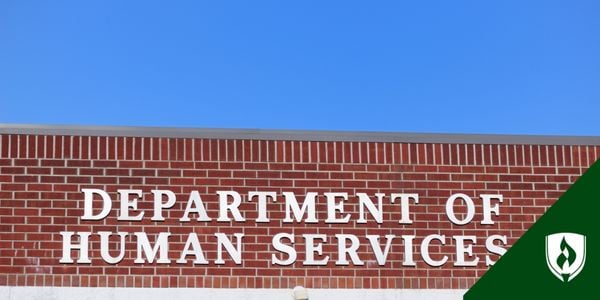
Human services is one of the fastest-growing and most meaningful career fields out there, offering professionals the opportunity to improve lives and strengthen communities.
From helping families access housing and healthcare to counseling individuals with mental health or substance use disorders, human services professionals make a lasting impact every day.
If you're wondering, what kinds of careers are in human services, you'll be happy to know the field offers a wide range of opportunities for people with associate, bachelor's, and master's degrees. There are plenty of entry-level roles as well as advanced clinical positions.
Human services is a broad field dedicated to meeting human needs through prevention, intervention, and support services. In this guide, we'll explore what defines the field of human services, as well as the most popular human services careers.
But no matter what kind of role you're drawn to, human services professionals play a vital role in improving quality of life for millions of people.
Rasmussen University’s part of American Public University System, Associate’s of Human Services and Bachelor’s of Human Services degree programs are not designed to meet, and do not meet , the educational requirements for professional licensure as a therapist, counselor, social worker, psychologist, or other similar licensed careers, in any state.
Human services exists to meet needs and gaps in society
One of the first things to understand about human services is that the field and the roles within it are constantly growing to meet current human needs.
Because the field is less defined than, say, nursing or childcare, (though human services might intersect with both of those areas as well) it can be hard to understand from the outside. If you choose this area of work, you'll likely need to draw on a wide array of skills and understanding to meet the needs of your role.
For example, imagine a man struggling with an alcohol addiction.
If you treated this person like a simple metric or statistic, you might say, enroll him in an addiction recovery program, problem solved.
But if you actually tried to help this person, you might discover he can't afford an addiction recovery program, he is an hourly employee without health insurance to cover anything, and he is a full-time, working, single parent. How is he going to drop everything, including his children, to get the healing and recovery help he needs? Who will pay for it when his income is tied up going toward food and rent and keeping his kids safe and healthy?
Then, if you dug deeper, you might discover that this person also has untreated mental health struggles beyond his addiction. Maybe he has been using alcohol to cope with the symptoms of a mental illness and has lacked time, funds and the full understanding of his condition to be able to address it.
Where should he go for help?
It's this kind of situation—the true complexity of human needs, that underwrites the whole field of human services.
Human services views problems in networks of relationship
Rather than treating social, economic, and psychological challenges in isolation, modern human services recognizes that behavioral health is deeply intertwined with an individual's overall well-being.
This integration infuses clinical psychology concepts, such as understanding cognitive processes, emotional regulation, and evidence-based therapeutic modalities, directly into community-based support systems.
By bridging the gap between macro-level social advocacy and clinical mental health intervention, the field now equips professionals to address complex psychological needs right where they intersect with everyday environmental and systemic challenges.
“By the very nature of their jobs, human service workers are required to deal with the totality of individuals and society, and specialists are not always available," writes author, Joanne Levine.1
Connecting people to the resources they need is harder than many people realize
If you've ever had to navigate the research and paperwork required to manage a disability, to qualify for low income housing, to manage life post-incarceration or to receive government assistance of any kind—you know that reporting and documentation can add up to a whole part-time job.
The barriers of legalese-worded paperwork and evidence requirements alone make it hard for people to get the assistance they both need and qualify for.
And most of the time, people who need help are not dealing with one problem at a time. A fully-resourced person with a great support network, health insurance, and a steady income will still have a difficult time working through a horrible life event.
That becomes so much harder when problems pile on, and money and support disappear.
The human services profession covers a wide range of need
The boundaries of the human services landscape have evolved significantly, expanding to fully encompass mental health and clinical psychology, providing more holistic, trauma-informed care.
Social service agencies were one of the first places someone might be able to go when they had no other options. But the scope of what a given social service agency might handle also has limits.
Youth service agencies, community mental health centers and community service centers are some other options that spring up.
Professionals work with people facing physical, emotional, financial, educational, or social challenges, helping them access resources and achieve greater independence.
The field currently combines elements of psychology, sociology, counseling, healthcare, social work, and public administration to improve individual and community well-being. There are numerous career paths within human services, ranging from entry-level support roles to advanced leadership positions, professional and paraprofessional jobs, and so many ways to get involved and help in your local area.
If you're considering a career in human services, you'll find a wide variety of job opportunities across healthcare, education, government, nonprofit organizations, and community agencies.
Let’s explore the roles and responsibilities of human services careers, popular job options, required education, and the skills needed to succeed. Please note that these roles may require differing levels of education and depend on location and employer.
1. Social services assistant
Many people are familiar with the role of a social worker--but human services education targets other roles within social work that do not include becoming a licensed social worker. Here's a quick comparison of the two fields.
- Human services is a newer term intended to cover non-licensure social service roles.
- Human services jobs usually require less education than social work jobs (which require a master's degree.)
- Government agencies, non-profits and organizations in addiction recovery, family services, healthcare initiatives, community resources and more may hire both human services workers and social workers.
- Social workers need licensure, human services workers do not.
- Licensed social workers can provide counseling and diagnose mental illness; human services workers usually do not. For further information on professional licensing requirements, please check the appropriate board or agency in your state of residence.
Graduates from a human services degree program might take on roles such as social service assistant and human service assistant to help individuals and families cope with life's challenges. They might work with and around social workers but would not be able to become a social worker unless they went to graduate school, earned a master's degree and gained licensure.
For more on that, check out Human Services vs. Social Work: A Brief Comparison.
Human service assistants work with people experiencing:
- Poverty
- Abuse
- Mental illness
- Addiction
- Family conflict
They assess the needs of their clients and connect them with resources.
Common work settings
- Hospitals
- Schools
- Government agencies
- Mental health clinics
- Child welfare organizations
2. Case manager
Human services professionals can work as case managers for a variety of different organizations. As a case manager, you'd coordinate services for clients by developing care plans, monitoring progress, and ensuring access to healthcare, housing, employment, and financial assistance.
Case managers often work with:
- Veterans
- Individuals with disabilities
- Seniors
- People experiencing homelessness
- Individuals recovering from substance use disorders
For more on this career, check out What Is a Caseworker? One Title, Many Roles.
3. Residential services worker
Residential services workers might work in mental health facilities, disability assistance or other residential care facilities. Professional practice in this role will include support for individuals dealing with anxiety, depression, trauma, grief, and other psychological concerns.
Responsibilities include:
- Following treatment plans
- Coordinating counseling services
- Collaborating with healthcare providers
4. Family support worker
Family support workers assist parents and caregivers by offering education, parenting resources, crisis intervention, and referrals to community programs.
Their goal is to strengthen family relationships and improve child well-being.
Check out What Is a Family Services Worker? A Closer Look at This Community Support Career for a deeper look.
5. Substance abuse counselor
These professionals help individuals recover from alcohol and drug addiction through counseling, relapse prevention strategies, and recovery planning. Positions can also include residential roles where you live on site in sober living communities, residential rehabilitation homes and more.
Many work in:
- Rehabilitation centers
- Hospitals
- Community clinics
- Correctional facilities
For a closer look at careers in this area of human services, check out 5 Careers in Addiction Recovery For People Who Want to Save Lives.
5. Child and youth services worker
Child welfare workers and child and youth services workers investigate reports of abuse or neglect, monitor child safety, and help families access services that promote healthy environments for children.
This career often involves collaboration with schools, courts, healthcare providers, community organizations and law enforcement. The Administration for Children and Families is a national organization through the federal government that plays a big role in funding and regulating these careers.
State and local governments will have their own branch of child protective services (CPS) that professionals in child welfare report to.
For a deeper dive into this role, check out What Does a Child Welfare Specialist Do? A Day in the Life.
6. Community services and outreach coordinator
Community outreach coordinators develop programs that connect underserved populations with healthcare, education, housing, and social services. They might work with community service managers, as well as specialists in different resources and healthcare organizations.
This is a great role for people who love to promote well-being and have a very collaborative and community-oriented mindset.
Responsibilities may include:
- Organizing community events
- Managing partnerships
- Recruiting volunteers
- Promoting public awareness campaigns
Other job titles in human services
Other typical job titles you might see in human services are:
- Community Service Assistant
- Social Service Specialist
- Human Service Assistant
- Advocate
- Program Assistant
- Adult Services Worker
- Human Services Administrator
Who should consider a career in human services?
As you can see, there are so many kinds of jobs in this field—but they all have one common denominator. Human services careers are all about helping people. You need to care about what happens to people in need to thrive in one of these roles.
At the core of this work are empathy, compassion, and active listening, which allow professionals to build trust and truly understand those they serve.
Beyond that, human services professionals also need...
Excellent communication skills
Cultural competence and the ability to communicate with all different kinds of people is very important in most human services roles. The field of human services looks at people holistically, acknowledging not only their individual humanity, but also the way cultures, local areas, economics and systems of oppression impact their lives.
Critical thinking skills
Because the field often involves navigating complex situations, professionals must also rely heavily on critical thinking, problem-solving, and ethical decision-making, as well as specialized crisis intervention skills in high-stakes moments. Many roles require assessment and the ability to cipher through many different factors happening at once to get to the core of an issue or find the best resources to help someone.
Collaborative skills
Since so many human services positions involve finding the right help for people who need it, you must be able to work not only with fellow human services professionals or people in your own organization--but also people representing government, healthcare, financial and educational services.
The desire to change the world for the better
Human services can be an excellent career choice for individuals who enjoy helping others and creating positive social change. While the work can be emotionally demanding, many professionals find it deeply fulfilling because they directly impact people's lives.
The human services field offers a rewarding professional landscape with versatility and growth opportunities. It provides a wide range of diverse career options and flexible work environments, allowing you to choose a path that fits your lifestyle.
The desire to meet needs
Because there is strong demand for qualified professionals, the field naturally offers excellent opportunities for advancement over time. Best of all, it lets you specialize in areas of personal interest, so you can truly align your day-to-day work with the causes and communities you care about most.
The outlook for human services careers remains strong due to increasing demand for healthcare, mental health services, aging support, and community-based programs.
Employment of social and human services assistants is projected to grow. The percent change in employment, projected 2024-2034 for Social and Human Service Assistants is 6%.2
Factors driving growth include:
- Greater awareness of mental health
- Expansion of behavioral healthcare
- Aging populations requiring support services
- Increased need for addiction treatment
- Growth in nonprofit and community organizations
Human services is more than a career; it's an opportunity to improve lives, strengthen families, and create healthier communities.
For some people, this field is the perfect way to change lives and help people. If that might be you, check out 8 Signs You Were Meant to Work in the Human Services Field.
1e, J. (2013). Working with People: The Helping Process (9th ed.). Pearson Education (US). https://ambassadored.vitalsource.com/books/9780205973699 (Levine, 2013, p. 144).
2Bureau of Labor Statistics, U.S. Department of Labor, Occupational Outlook Handbook, Social and Human Services Assistants at Social and Human Service Assistants : Occupational Outlook Handbook: : U.S. Bureau of Labor Statistics,(visited July 10, 2026), Employment conditions in your area may vary.