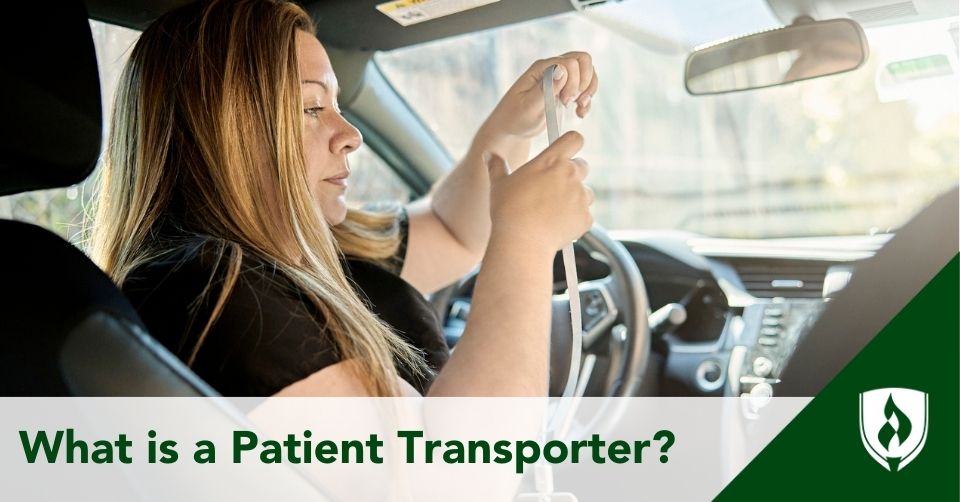
Transportation can be one of the biggest barriers in healthcare and mental health services. When a patient or client does not have reliable transportation to appointments, their health or success in treatment can be at risk.
In rural areas, distance can make the problem worse. Providers may be far from patients and there are often fewer public transportation options. Patient transporters, often called transporters, help fill this gap by helping people get to the services they need.
If you like helping people and you like being on the move, patient transportation may be a good fit for you.
Responsibilities for patient transporters
The main goal of a patient transporter is simple: help people get where they need to go for care. In patient transport roles, that can mean driving patients or clients to appointments. In a hospital or medical center, it can also mean moving patients through the facility to support treatment and procedures.
Your responsibilities will depend on your location, the type of facility, and the patients you serve. Still, most patient transporters focus on helping patients arrive safely, stay comfortable, and avoid missed care.
Transporting patients to medical appointments and services
In many roles, your workday centers on patient transportation between locations. You may transport patients to medical appointments, therapy sessions, or other services.
You might:
- Transport patients or clients to appointments on time
- Support safe pickup and drop-off routines
- Help patients feel comfortable while moving between locations
Safety, support and equipment
Safety is a big part of this job, both on the road and during transfers. Depending on the setting, you may also assist patients with mobility and handle basic medical equipment.
You may:
- Follow driving safety practices and use seatbelts correctly
- Support different needs based on the population, like helping children use car seats or making sure older adults are comfortable
- Help staff transfer patients or clients in and out of vehicles when needed
- Load and unload medical equipment like wheelchairs or walkers
- Deliver equipment or supplies to a patient’s home in some roles
- In hospitals, help move patients around the facility using wheelchairs or by supporting transfers between operating rooms and treatment areas
- Prepare for weather conditions with appropriate vehicle supplies and equipment
Work environment and schedule
A patient transporter’s work setting can look different depending on where you work and who you support. Some roles are based in a hospital where you help move patients through the facility. Others are connected to social service agencies where transportation helps clients access care they might otherwise miss.
Schedules can vary, too. If you mainly transport patients to doctor visits or therapy appointments, your hours may be closer to weekday and business hours. If you transport clients to parent-child visits in the child welfare system, you may work evenings or weekends.
Where you work can also shape what your day looks like. Patient transporters may work in settings like:
- Hospitals and medical centers
- Social service agencies
- Doctor’s offices and outpatient settings
This job is collaborative. You will likely communicate with patients or clients, families, and the care team supporting the case. You may also need to share relevant safety concerns with staff. Since you can hear sensitive information, like discharge plans, you are expected to respect and protect patient privacy.
And while the role is practical, it can feel personal, too. You are often one of the people helping a stressful day feel more manageable.
Skills and abilities needed for patient transporters
Patient transport is a people-focused job, so your skills matter just as much as your ability to transport patients safely. Since you work with patients, families, nurses and other staff, strong communication helps everyone stay on the same page.
You also need to stay organized. On a busy workday, good time management can help patients keep exams, procedures and appointments so their care is not delayed.
Important skills for patient transporters
Strong communication and interpersonal skills are a must. You may need to explain what is happening, answer basic questions, and help patients feel more comfortable as they move through a facility or travel to a provider.
You also need a team mindset. Patient transporters support the bigger care team, so it helps to stay aligned with the care plan and share relevant concerns when something impacts safety or access.
Empathy and compassion matter, too. Some patients need a little extra support, physical or emotional. That could mean noticing who needs help walking into a room, getting settled in a wheelchair or feeling calm before an appointment.
There are also practical skills that can make the job easier, including:
- Understanding the regulations that guide the organization and protect privacy
- Time management to support on-time patient transportation and avoid missed appointments
- Documentation skills, if required for the role
Education and requirements
If you want to work in a helping role but you do not have a college degree, or you are still working toward one, patient transportation can be a solid option. Requirements can vary by facility and by location, but most roles have a few basics in common.
What you typically need to qualify
- A high school diploma or equivalent
- A driver’s license for driving roles
- A background check
- A different license classification for larger vehicles, depending on the role
- A reliable vehicle and your own car insurance in some positions
- Mileage reimbursement may be offered, so check the job posting
- Training is provided by the facility or organization and may vary by location
Career opportunities and advancement
Patient transporter roles can also be a steppingstone. Depending on the facility or organization, you can build experience that may support future roles in healthcare or human services. Even if your title stays the same, you can build experience that supports future roles in healthcare or human services.
Where this role can lead
In some workplaces, there may be opportunities to move into a leadership position among transporters. That could mean helping train new team members, supporting scheduling or serving as a go-to person for the team.
This role can also help you learn how healthcare works from the inside. You work with patients, nurses, and other staff, which can help you build confidence and learn what kinds of roles you may want next.
Both healthcare and human services have lots of interesting roles for people who want to do something good for society. For some examples, check out Jobs That Help People: Choosing a Degree for a Fulfilling Career.
Benefits and rewards
Patient transport can be rewarding in a few different ways. For some people, it’s the steady schedule and practical workday rhythm. For others, it’s the fact that you are directly helping patients access services that support their health or mental health.
Pay and benefits can vary by location and facility. A large medical center may offer different incentives than a small social services provider, so it helps to read each job posting closely and compare options.
Here are a few common reasons people like this work:
- Benefits can vary based on the facility and location
- The work can feel meaningful because you help people access care and support mental health needs
Work that makes the world better
Patient transport supports access to services and continuity of care. Whether you are walking a patient to a room for procedures in a hospital or driving someone to therapy or a visit, your work helps connect people to the care they need.
Patient transportation can also help protect vulnerable individuals by making sure distance or location does not become a barrier. When patients can get to appointments safely and on time, they have a better chance to stay on track with treatment and support their health or mental health goals.
If that is something that matters to you, check out What Can You Do With a Human Services Degree.