We use cookies on our website to support technical features that enhance your user experience, and to help us improve our website. By continuing to use this website, you accept our
privacy policy.
Find the Florida campus nearest you with resources like clinical and medical labs, faculty and peer collaboration, computer labs, student lounges and more.
Find the Illinois campus nearest you with resources like health sciences labs, faculty and peer collaboration, computer labs, student lounges and more.
Find the Minnesota campus nearest you with resources like clinical and medical labs, faculty and peer collaboration, computer labs, student lounges and more.
Explore the Fargo campus near the Minnesota border with resources like in-person labs, faculty and peer collaboration, computer labs, student lounges and more.
Choose your Master of Science in Nursing (MSN) program based on your specialization interest, from Leadership, Education or Technology to advanced Nurse Practitioner fields.
Choose an additional Master’s level specialization based on your nursing career goals, from Leadership, Education or Technology to advanced Nurse Practitioner fields.
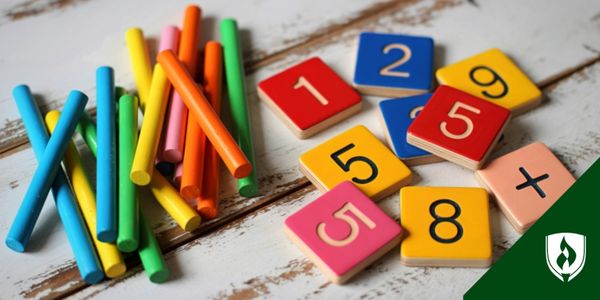
As we increasingly stress the importance of academics to young children; parents and teachers must question their true goals. Do we simply wish that our children to know all their “A-B-C’s” and “1-2-3’s” by the time they are four years old? Isn’t our true goal not to lead children but rather to help them attain their own problem-solving skills? As parents and educators, isn’t one of our main priorities to foster childrens’ passion for learning, and to encourage them to ask “why”?
Early childhood educators believe that their job is to offer children the opportunity to grow and succeed. Additionally, we know that children learn best by doing. Years of rote memorization and skills testing are becoming less and less important. As instructors or caregivers, we need to be providing children the chance to ask questions; rather than giving our students answers. We need to offer them the tools to discover solutions on their own.
I still own a set of 1976 World Book Encyclopedias. To my parents, these books were the greatest gift they could offer. As a young teacher, I asked my mom if I could take the encyclopedias to my classroom. She was very reluctant and wanted to know how I proposed to use these big, old, fancy books with my three-to-five year-old students. My response was: let them explore and learn. She was confused; how could a three year-old, one that couldn’t truly read, she asked, benefit from an encyclopedia—especially one that might not be up-to-date?
These encyclopedias—which used to be my prized possessions—were destined for a recycling plant, or worse, a garbage dump. The information within was considered useless because some details have changed, and new discoveries have been made. However, I told my mother, in the “B” book there is a whole section on butterflies with beautiful, lush pictures; there is information about body parts, breeds, geographic locations, and references to folktales or fables that feature butterflies. For a child interested in butterflies, the 1976 “B” encyclopedia book actually possesses a wealth of information.
As parents and teachers, we need to remind ourselves that the natural learning that takes place while children browse through book pages is priceless. Better, in books like encyclopedias, there are not clearly outlined or delineated sections; everything—from social studies to anatomy, anthropology to math—is incorporated into a single entry in one book.
Thus, from this one entry in this one book, other areas of interest can develop. A child that wants to know about butterflies may need to learn how to spell the word. They may realize how butterflies, as insects, are different from mammals and reptiles. They may start thinking about the world as a whole, and where different butterflies are located. They may start asking questions like: why are butterflies different colors? Or, they may wonder how a caterpillar turns into a butterfly. As a teacher, it is essential to think on-the-ground, as a child would; we must take these general observations and turn them into new learning opportunities.
More, as a teacher, be sure to supplement your classroom with materials to further engage your students’ thinking. Offer children ways to continue exploring their interests. Remember, children learn best by doing, so rather than leaving great resources like encyclopedias to collect dust, let your students use them. Let children ask the questions about subjects they are interested in, and offer ways to help them make their own discoveries.
Now, a final test: if a child asks “how does a caterpillar become a butterfly?” what will you say? Instead of “by making a cocoon,” will you have the resources available to reply: “great question, what do you think? Where can we find the answer?”
Julie Lawrence is the Academic Dean at Rasmussen University in Mokena, Illinois. She has worked in the education field for more than 20 years. She continues to be an advocate for children through work in partnership with agencies such as CTTP and Advocates United for Joliet Children to help protect our future.
This piece of ad content was created by Rasmussen University part of American Public University System to support its educational programs. Rasmussen University may not prepare students for all positions featured within this content. Please visit www.rasmussen.edu/degrees/ for a list of programs offered. External links provided on rasmussen.edu are for reference only. Rasmussen University does not guarantee, approve, control, or specifically endorse the information or products available on websites linked to, and is not endorsed by website owners, authors and/or organizations referenced. American Public University System (the System) is accredited by the Higher Learning Commission (HLC) (www.hlcommission.org), an institutional accreditation agency recognized by the U.S. Department of Education (ED). The System is comprised of American Military University (AMU), American Public University (APU), Rasmussen University (RU), and Hondros College of Nursing (HCN).